Posts

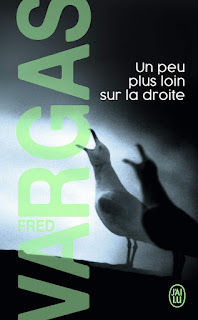
Un peu plus loin sur la droite - Fred Vargas
Image
Before we even get to the three evangelists in this second book featuring them, Vargas has another whole set of eccentric outsiders to open Un peu plus loin sur la droite (Literally, 'A Little Bit Further to the Right' but published in English as ' Dog Will Have His Day "). They don't come stranger than Louis Kehlweiler, " l'Allemand " (The German). As something of a guardian of the city, he and his team of observers monitor the goings-on in Paris - and some even wider - from a plan of numbered benches and trees, carrying a toad around in his pocket. On the advice of an old friend he recruits Marc Vandoosler, an unemployed historian of the Middle-Ages who we know from Debout les morts , as part of his ' grande armée ' to sort and classify cuttings and items of interest from national and regional newspapers. But what he is currently more interested in more than any usual report in the papers is dog shit. Or to be precise, something he finds in...
The Drifting Classroom - Kazuo Umezz

Image
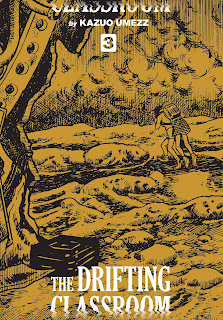
Kazuo Umezz started his professional career as a comic artist in the 1950s. Now aged 85, he continues working in the medium up to the present day, and is something of a personality in his native Japan. Little of his work has been published in English (although there is more to come and more if you look for French and Italian editions), but his classic 1974 serial The Drifting Classroom that made him famous is at least available in English translation and published by Viz Media in three bulky Perfect Edition hardback volumes. It's an incredible piece of work that stands as one of the all-time classics of Japanese manga. The Drifting Classroom 's themes are similar in content and style to the early works of the modern horror master Junji Ito, while from a western perspective being reminiscent of the dark horror artwork of Charles Burns. Umezz's naive cartoony artwork however is closest to style of the master Osamu Tezuka. Umezz started his career in that era and continued to...

May God Forgive - Alan Parks

Image
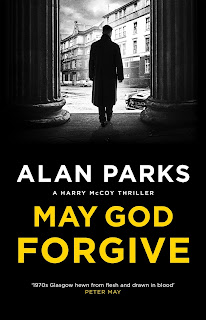
Period crime fiction isn't new or original and there are plenty of gritty dramas to be explored in darker times, but what is exceptional in the 1970s' setting of Alan Parks' Harry McCoy thrillers is how he succeeds in showing how its past is relevant to today. Peeling back the layers of history each of the books reveals how the poverty, deprivation and social inequality that gives rise to small-time crime, drug dealing and gang violence has developed into the kind if crime we see today on a global scale. Crime in 70s' Glasgow takes on many forms, but in May God Forgive  it's brought home to McCoy just how great the challenges are in dealing with the source of those problems through the normal channels of the criminal justice system. It seems like business as usual then as far as crime and death is concerned in the city at the start of May God Forgive . Glasgow in 1974, as we have come to see pretty comprehensively in the four previous gritty police detective Harry ...

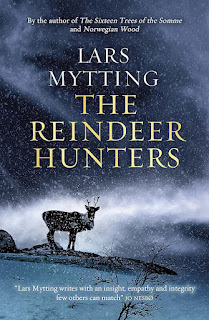
The Reindeer Hunters - Lars Mytting

Image
The Reindeer Hunters is the second book in the Lar Mytting's Sister Bells trilogy, so don't read on unless you have read the first book, The Bell in the Lake . The second book in the trilogy opens in 1903, over twenty years after the events recounted in The Bell in the Lake . The previous book ended with the pregnant Astrid Hekne seeking to leave the small frozen village farming community of Butangen in the far north of Norway, seeking to fulfill a dream of seeing more of the wider world that had been open up to her by the visit of a German architect, Gerhard Schönauer, who had come to the village to dismantle the village's traditional medieval stave church for transportation and rebuilding in Dresden. Astrid however has died during childbirth, giving birth to twins. Guilty over the fact that his actions may have contributed to Astrid's untimely death, the pastor Kai Schweigaard brings one child Jehans back to Butangen, believing that only one of them has survived. The...

The Quiet Whispers Never Stop - Olivia Fitzsimons

Image
There have been an impressive array of new voices coming out of post-conflict Northern Ireland now looking back on an era that is still proving hard to come to terms with but is providing rich ground to explore. Aside from Phil Harrison's fascinating The First Day , it's women's voices - Michelle Gallen's Big Girl Small Town , Michèle Forbes' Ghost Moth and particularly Anna Burns' Milkman - that all find unique and personal ways of looking at the circumstances of women struggling to escape traditional roles, social expectations and the religious conservatism of the province. That is undoubtedly more prevalent or at least harder to escape in the small communities outside of Belfast, as Olivia Fitzsimons describes in the Downpatrick setting of The Quiet Whispers Never Stop . That's not just for young women who step out of line, like Samantha Malin, a 17 year old preparing for final exams in 1994 against the backdrop of the final bloody years of the troubles...

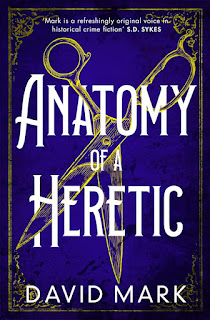
Anatomy of a Heretic - David Mark

Image
Although he is better known for writing contemporary crime thrillers in his DS McAvoy series, somehow David Mark appears to be quite at home in another century. As cold and corrupt as the modern world in the environs of Hull might seem, the dark recesses of human behaviour, corrupted flesh and descent into madness and violence are ideally suited to the dark, fetid seventeenth century prison cells, filthy alleys, backstreet brothels and foul living quarters of sailing ships of Anatomy of a Heretic . Mark doesn't need any excuse to depict such a world of horror, but given free reign to let his imagination run wild he definitely makes the most of it. The book's prologue indeed opens with just such a scene, one that lives up to the book's title and then some. We witness the dissection of the corpse of a woman for an anatomy lesson in the year 1628, only it's from the point of view of the woman lying on the table under the knife. Someone has gone to great pains to make it lo...

Anéantir - Michel Houellebecq

Image
If you can get past the undisguised contempt for bourgeois family life and morals and the copious graphic descriptions of sex, you will find that Michel Houellebecq often has something pertinent, premonitory and usually pessimistic to say about the state of the world we are living in. For me he sometimes misses the mark, but when he gets it right - in Plateforme , in Sérotonine - he casts the rest of the conservative French literary world into shade. With its provocative title, his latest Anéantir (Annihilate) is in some respects typical of Houellebecq's cynical view of individuals, family and society, but there is a noticeable change of tone here and some kind of acceptance that the issues he grapples with are far more complicated  and important to deal with than just through his personally tainted perspective. It takes a while and a few dead-end plot developments for Anéantir to find its focus and purpose - which I guess is probably true to life itself. The story is set in the...