Posts

Titanium Noir - Nick Harkaway

Image
There's a definite Blade Runner vibe to Titanium Noir , but that's probably only to be expected. It's going to be hard to avoid comparison to a work as influential in the science-fiction world as that when a movie or book adopts the style of the noir genre, is futuristic and somewhat nihilistic in outlook. There is still plenty of room for originality here however, particularly for an author like Nick Harkaway, and while there are some obvious and probably unavoidable similarities and correlations with Ridley Scott's influential take on Philip K Dick, Titanium Noir succeeds to some extent in putting its own stamp on the material, or at the very least manages to be a hugely entertaining dark futuristic science-fiction noir thriller. Cal Sounder is not an official on the police force but a 'specialist' they call upon when it comes to dealing with any crime or incident that involves individuals known as Titans. Much like Rick Deckard when it comes to dealing with...

To Die in June - Alan Parks

Image
Death on the streets of Glasgow in the 1970s isn't an unusual circumstance, as you will know if you are familiar with any of Detective Inspector Harry McCoy's dealings in Alan Parks' series. With the degree of poverty in the city and the amount of down-and-outs on the streets, death by natural causes - if you include drinking yourself to death as natural causes - is not uncommon either. That certainly seems to be the likely verdict on the cause of death of Jamie MacLeod, "Govan Jamie" when he is found on waste ground in May 1975 not far from Argyle Street. It had to happen sooner or later, and there's not much chance that anyone would have a reason to kill him. A witness however tells McCoy that he saw both Jamie and another down-and-out die after drinking from what appears to be tampered hooch in a bottle of Irn Bru. Still, the deaths of two homeless alcoholics doesn't seem like grounds that will warrant any further investigation by the police, and McCoy ...

J'aurais aimé te tuer - Pétronille Rostagnat

Image
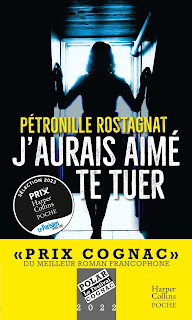
What is interesting about Pétronille Rostagnat's J'aurais aimé te tuer ('I Would Have Loved to Kill You') is that it's a thriller that proposes a variation on the idea of the 'perfect crime', where it's the act of a criminal overturning another perfect crime and having moral justification for it that becomes the perfect crime. But why even stop there? A perfect crime thriller however needs to provide a credible rationale, a clever twist and an airtight plot and I'm not convinced that Rostagnat succeeds. She certainly gives it a go however and provides plenty of mystery to keep you guessing along the way. Commander Damien Deguire of the Crim' de Versailles ( brigade criminelle ) is certainly challenged with a unique situation when Laura Turrel presents herself at the police station claiming to have killed a man, Bruno Delaunay. A waitress at a local restaurant, Laura had also been working part-time as a cleaner for Delaunay, who was one of its re...

The Last Passenger - Will Dean

Image
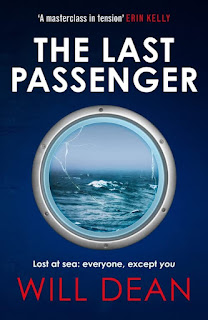
There's a certain amount of pleasure to be derived from a well-constructed thriller, even if it follows a familiar pattern, one that draws you in and leads you by the nose through the steps of escalation from initial criminal act (usually murder) through the investigation, complications and twists to resolution. What I find even more thrilling is a book that presents you with a highly unusual circumstance from the outset that seems almost impossible, meaning that you have no way of guessing where it is going to go from one page to the next. That's great of course, as long of course as the author provides a suitable, credible and necessarily inventive resolution. I'm afraid that Will Dean just doesn't follow though on what he sets up at the start of The Last Passenger . The novel certainly delivers in the WTF stakes right from the start, as Caroline Ripley, after only one night aboard the transatlantic liner RMS Atlantica, wakes up to find that everyone else on the ship ...

The Woman Chaser - Charles Willeford

Image
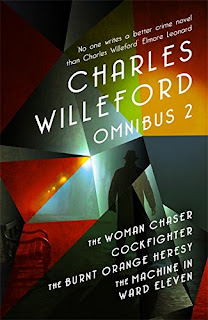
Pulp fiction has the reputation of being designed for cheap thrills, and certainly that is a part of its attraction, but it has many often overlooked qualities, not least of which is the breaking of taboos and stretching boundaries of what is "acceptable" in writing. Often that is a side benefit of striving for those cheap thrills. The finest exponents of the art form - and it certainly rates as such as far as I'm concerned - also demonstrate a tremendous facility for plotting, structure and characterisation, all the components of good writing. It's not surprising then that many also rate as literary greats - Raymond Chandler certainly, Patricia Highsmith also - that manage to shine a light on dark motivations of crime in relation to society, taking them down paths that few mainstream writers would dare to venture. Written in 1960, The Woman Chaser by Charles Willeford has a deceptive title, but the path that it takes you down is also a deceptive one. It's clearl...

La chambre des morts - Franck Thilliez

Image
There is of course no such thing as a perfect crime, but Vigo and his friend Sylvain think they have managed it. Or perhaps they don't really think of what they have done as a crime but an unfortunate accident that works in their favour. It certainly wasn't premeditated to kill anyone while driving a car in an area of deserted warehouses in Dunkirk at 100kmh in the dark with no lights on, but when they hit a man and find that he has a suitcase containing €2 million euro, well, disposing of the body and holding onto the money certainly can't be treated as anything less than criminal. But what is no one was there, no one sees it and no one finds the body and they keep the 2 million, does that make it a perfect crime? What Vigo and Sylvain don't really think to ask themselves - until it is too late of course - is what a man was doing in that remote deserted place with such a huge sum of money, and did no-one really witness what happened? It sounds suspiciously like a ranso...

South - Babak Lakghomi

Image
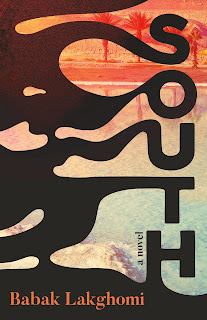
Born in Tehran in Iran but now living in Canada, Babak Lakghomi's writing seems to reflect personal experience that struggles to grasp the disparity of living under a repressive regime with the idea of a writer's ideal of personal freedom of expression. South , the author's second short novel, tried to put those ideas across in a more abstract fashion, establishing a mood that explores deeper, human concerns on a more universal level. The narrator of South , B, is a freelance journalist, planning to write an article about life on an oil rig in the South of an unnamed country. His intentions for choosing to write about this subject aren't entirely clear, especially as there are more immediate concerns and problems in the world. A drought, brought about by a climate crisis seems to have had a major impact on the country, particularly in the South. Arriving at a fishing village before being transported to the rig, strange rites take place that ominously foreshadow what lie...